
Three products, one playbook
Laveur (in-house)
Outside of client work, we build our own software: a product recommendation engine, a historical-site guide, and a movie-picker app. Same process, same low-cost cloud architecture, three very different problems.
Three live, shipped products: USA CPG, The Local Archives, and Reel In, each running on infrastructure that costs closer to a coffee than a software budget.

The challenge
USA CPG. Affiliate marketing publications that review consumer products either hand-write every ranking (slow, inconsistent, hard to scale past a handful of categories) or lean on opaque "best of" lists readers have learned not to trust. We wanted a rankings engine that could scale to dozens of categories without ballooning costs, one that could explain, in plain terms, why any product scored what it did. We also needed a new, faster, more scalable way to publish high-quality editorial writing that stands up to scrutiny without a bloated CMS.
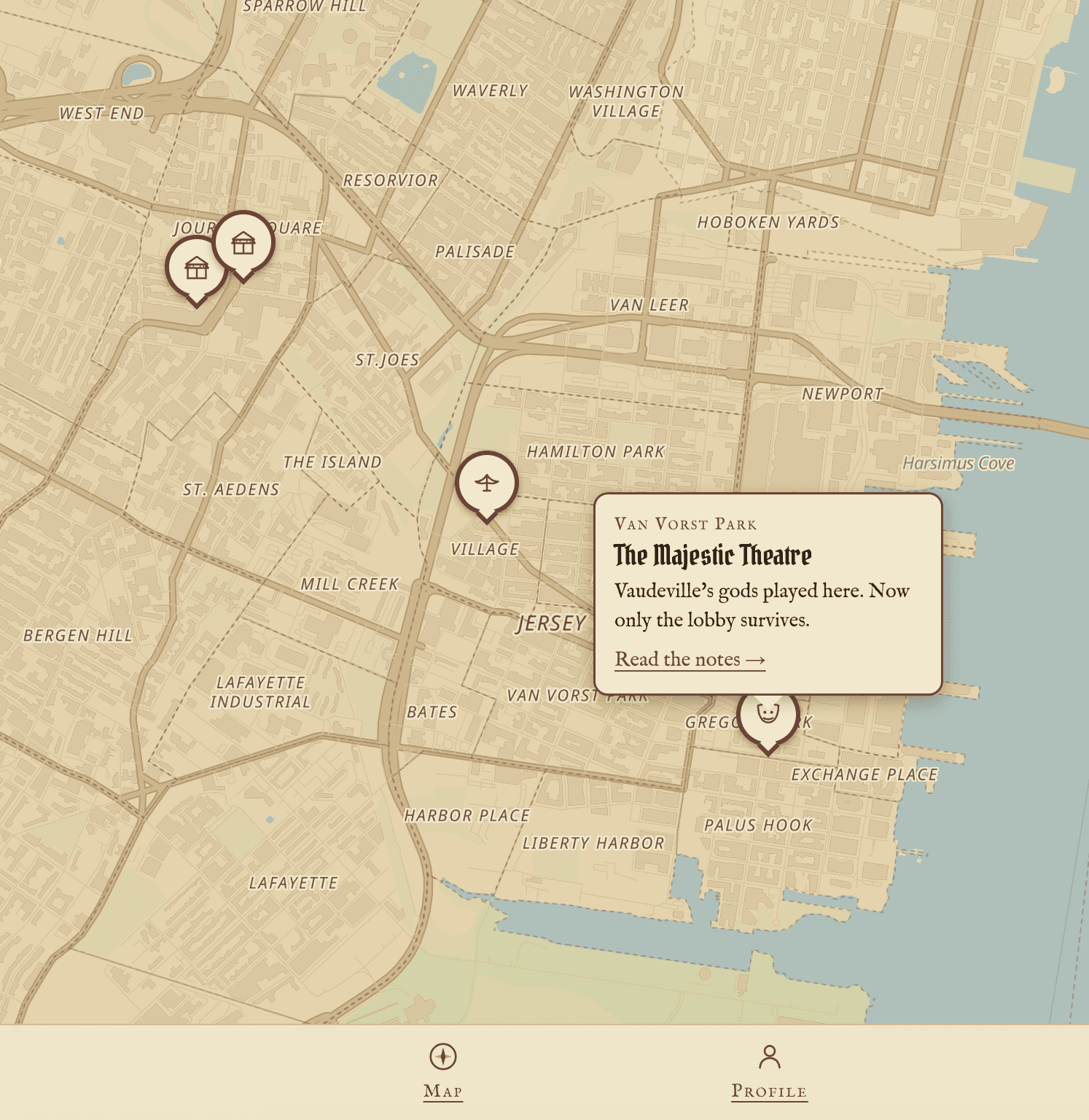
The Local Archives. Interesting local history, the buildings and sites with a real story behind them, is scattered across plaques, forums, and word of mouth. There's no single, browsable, trustworthy place for someone (or a group of friends) to find what's worth visiting nearby, read the actual story, and know whether it's worth the trip.
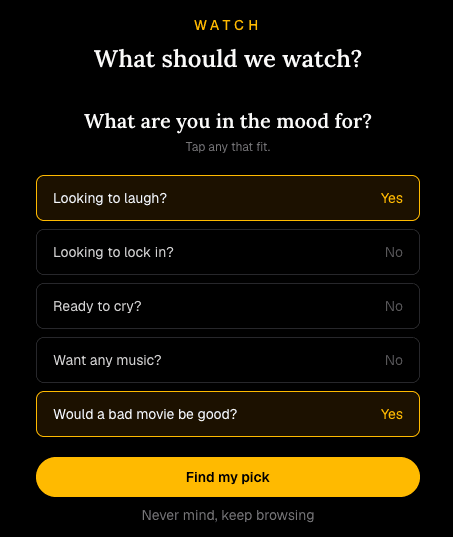
Reel In. Picking something to watch, alone or with other people, usually means twenty minutes of scrolling and a "we don't know either" impasse. Existing recommendation engines optimize for engagement (keep you scrolling) rather than for a fast, confident answer, and none of them handle "we" as well as "me."
The approach
USA CPG. We built a scoring engine that blends four signals (Bayesian-adjusted rating, log-scaled review volume, quality-per-dollar value, and sales-rank momentum) into a single explainable Quality Score, with guardrails (brand diversity enforced, human override recorded on top of the algorithm, and more) so the number stays honest. A tiered ingestion pipeline pulls catalog, pricing, ratings, and sales-rank data on a refresh budget scaled to how fast each category actually moves, running on Firestore behind a Next.js front end on Cloud Run.
The Local Archives. We built a vintage-styled map with custom markers over each site, paired with long-form "Notes from the Team" write-ups in a consistent editorial voice. Community trust is enforced structurally, not just by policy: ratings and reviews are gated behind a verified "Visited" status, checked in Firestore security rules, not just the UI, and phone-verified accounts back every submission. The whole thing runs on Firebase Auth, Firestore, and Cloud Run, installable as a PWA.
Reel In. We built a taste-profile engine that imports a user's existing Letterboxd history for an instant start, as well as a suggestion sharpening tool via a fast, head-to-head "movie mash" style game a user can share with friends. Recommendations blend taste affinity (about 65% of the score, computed per genre) with a quality signal from critic and audience scores (about 35%), and group sessions use a "least misery" strategy so the one pick it surfaces actually works for everyone in the room. A Python FastAPI microservice handles the recommendation math behind a Next.js app, backed by Postgres on Cloud SQL.
Across all three. The build process itself was consistent: Claude Code driving implementation, work broken into dedicated subagent workstreams per feature area (auth, ingestion, scoring, UI, deploy) rather than one long linear build, and infrastructure chosen deliberately for near-zero idle cost: Cloud Run's scale-to-zero, Firestore's pay-per-read pricing, managed Postgres only where a relational model actually earned its keep.
The results
USA CPG. Live across 30 product categories, with every score traceable back to the signals that produced it, built to be trusted by readers and, increasingly, cited directly by AI answer engines.
The Local Archives. Live, and started in Jersey City, NJ, with real phone-verified accounts, a moderated content model, and a community layer with structural safeguards against fake reviews. Not a prototype, a shipped app that's growing with more cities planned.
Reel In. Shipped across more than 14 structured workstreams (auth, catalog, recommendations, the head-to-head game, lists, onboarding, profile, and the production deploy itself) as a complete, working product rather than a demo. This one was the most complex build.
Combined. Three full products, each with its own auth, data layer, and recommendation logic, running on cloud infrastructure lean enough that the hosting bill for all three together stays under $50 per month. Proof that the same fast, cost-disciplined build process we bring to client engagements holds up when we're the client.